10 Herbs That Naturally Boost Your Immune System
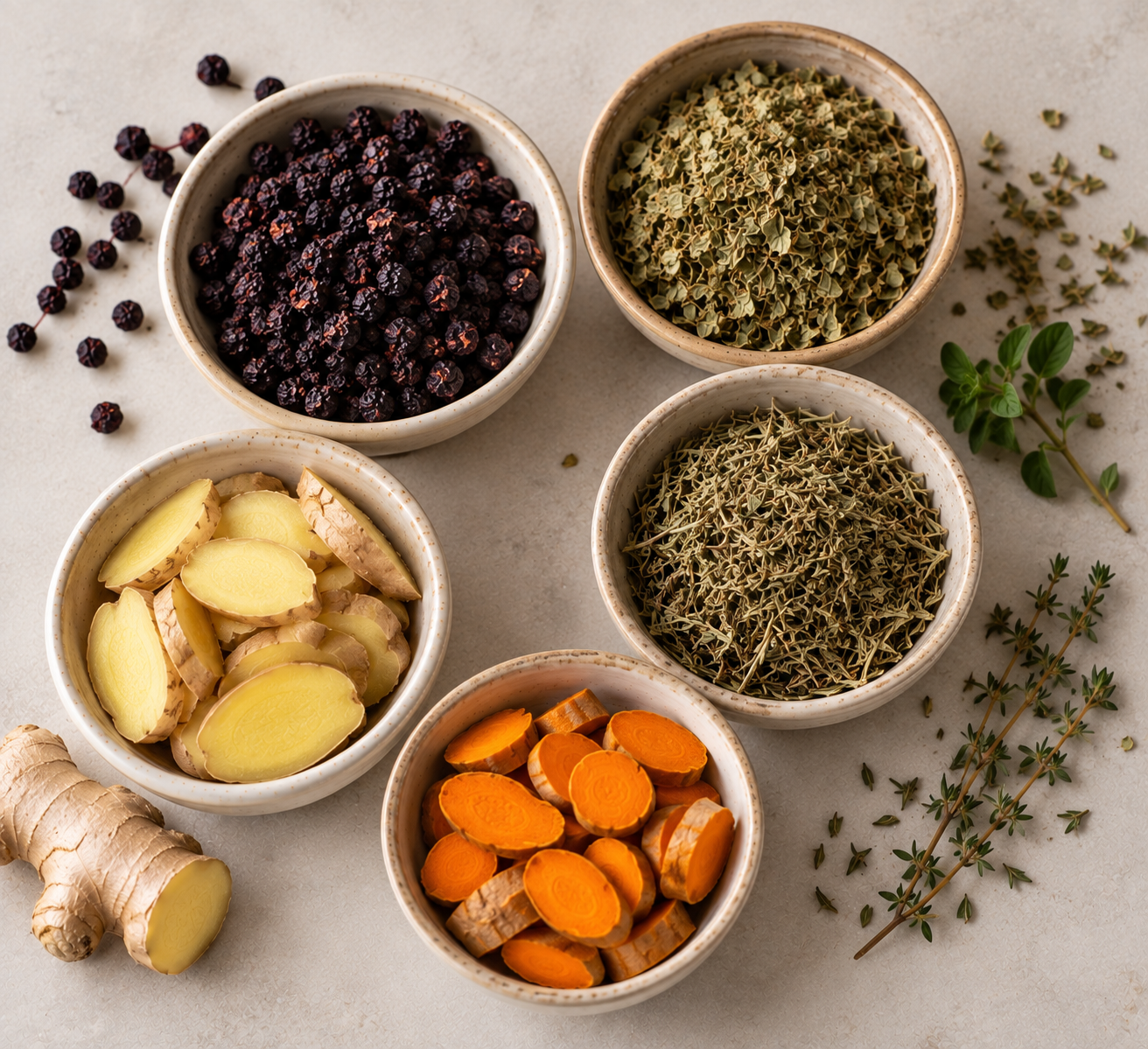
When cold and flu season rolls around, many of us start looking for natural ways to give our immune systems a little extra support. While no single herb can prevent you from getting sick, certain herbs and botanicals have been used for generations to support immune function and overall wellness.
Herbs can be a wonderful addition to a holistic wellness routine alongside quality sleep, nourishing foods, regular movement, stress management, and other healthy habits.
Below are 10 herbs and spices traditionally used to support the immune system, along with simple ways you can incorporate them into your wellness routine.
1. Elderberry
Elderberry is probably one of the most recognizable herbs associated with immune health, especially during cold and flu season. These deep purple berries are naturally rich in plant compounds called anthocyanins, which have antioxidant properties.
2. Turmeric
Turmeric is a vibrant golden root that has been used for centuries in Ayurveda and other traditional medicine systems. Its most well-known active compound is curcumin, one of several naturally occurring curcuminoids found in turmeric.
3. Oregano
Oregano isn't just a kitchen staple. This aromatic herb contains naturally occurring plant compounds such as carvacrol and thymol, which have been studied for antimicrobial and antioxidant activity.
4. Echinacea
Echinacea is a flowering plant that has become one of the most popular herbal remedies associated with cold and flu season
5. Astragalus Root
Astragalus root has been used for centuries in Traditional Chinese Medicine, often alongside other herbs. It's also commonly described as an adaptogen and has traditionally been used to support resilience during periods of physical and emotional stress.
6. Ginger
Ginger is one of my favorite ingredients because it can easily become part of your everyday wellness routine. This warming root contains naturally occurring compounds, including gingerols and shogaols, that have antioxidant and anti-inflammatory properties
7. Garlic
Garlic has been used both as food and for medicinal purposes for thousands of years. When fresh garlic is chopped or crushed, chemical reactions produce sulfur-containing compounds associated with many of its biological properties.
8. Andrographis
Andrographis (Andrographis paniculata) is a bitter herb traditionally used in Ayurvedic and other Asian systems of medicine. It's commonly included in herbal preparations intended for seasonal respiratory wellness.
9. Thyme
Thyme is another everyday culinary herb with a long history of traditional use. Like oregano, thyme naturally contains aromatic plant compounds, including thymol, and has been studied for antioxidant and antimicrobial activity.
10. Holy Basil (Tulsi)
Holy basil, also known as tulsi, is an herb widely used in Ayurveda and traditionally valued for supporting the body's ability to adapt to stress. While tulsi shouldn't be viewed as a treatment for infections, supporting your overall well-being—including sleep and stress management—is an important part of maintaining normal immune function
Disclaimer***
The information provided in this article is for educational purposes only and is not intended as medical advice, diagnosis, or treatment. Herbs and dietary supplements can interact with medications, affect certain medical conditions, and may not be appropriate for everyone, including those who are pregnant or breastfeeding.
Always consult your physician, pharmacist, or another qualified healthcare provider before starting any new herb or supplement, especially if you have a medical condition or take prescription medications. Never stop or change a prescribed treatment without first speaking with your healthcare provider.
References & Sources
National Institutes of Health (NIH), Office of Dietary Supplements. Dietary Supplements for Immune Function and Infectious Diseases. This is an especially useful source because it reviews evidence, effectiveness, and safety for immune-related supplements and botanicals, including elderberry, echinacea, garlic, and andrographis.
