Cycle Syncing 101: How to Work, Eat, Move & Live With Your Cycle
For generations, women have been taught to move through the world as if our bodies aren't cyclical—expected to maintain the same pace, productivity, and energy every day of the month.
We're expected to wake up with the same energy, maintain the same level of productivity, exercise at the same intensity, and keep up with the same social schedule—regardless of where we are in our menstrual cycle. But our bodies aren't static.
Throughout the menstrual cycle, hormones like estrogen and progesterone naturally fluctuate. These hormonal changes can influence everything from energy and appetite to sleep, mood, and how we feel during exercise.
Cycle syncing is the practice of becoming more aware of these changes and, when possible, adjusting your lifestyle to better support what your body needs throughout the month. And it goes far beyond changing what you eat or how you exercise.
You can also consider your cycle when planning your workload, scheduling social activities, prioritizing rest, and deciding when you may want more or less stimulation.
There are no set rules when it comes to cycle syncing. Think of it as an invitation to become more curious about your own body.
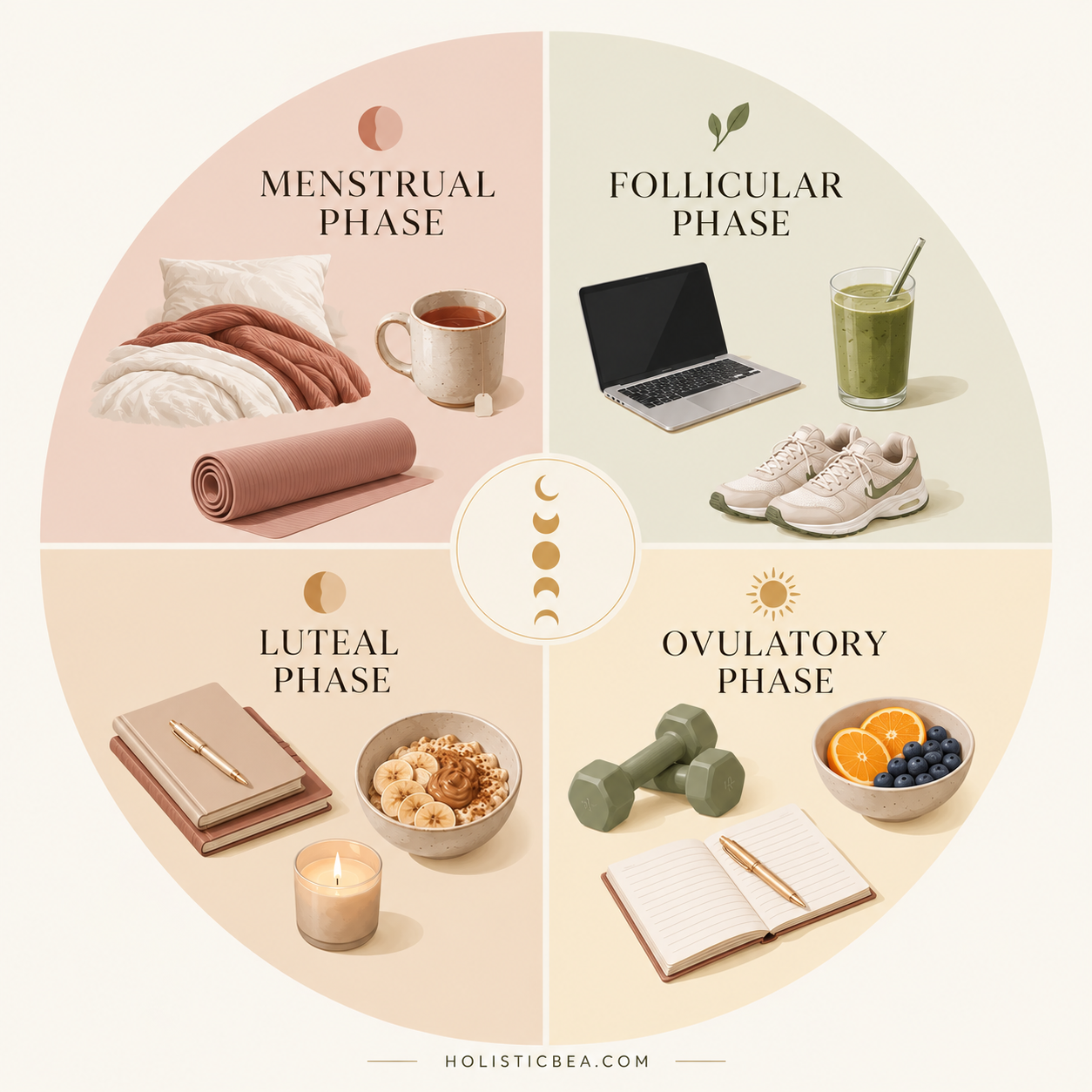
Here's a look at the four phases of the menstrual cycle and some ways you can experiment with working, eating, moving, and living in greater alignment with each one.
Phase 1: Menstrual Phase (Days 1-5)
What's happening: Your period begins on Day 1 of your cycle. Estrogen and progesterone are relatively low, and some people experience lower energy, cramps, fatigue, or a greater desire for rest. This can be a natural time to turn inward and pay attention to what your body is asking for.
Work and Creativity
If your schedule allows, consider creating a little more space during the first few days of your period.
This might look like:
Focusing on independent or lower-intensity tasks
Reviewing projects rather than launching new ones
Reflecting on what's working and what isn't
Brainstorming without pressure to immediately execute
Building more breaks into your workday
If you don't have control over your work schedule, even small adjustments—like taking your lunch break away from your desk or avoiding unnecessary commitments after work—can create more room for recovery.
Nourishment
Focus on nourishing meals containing nutrients such as iron, protein, magnesium, and vitamin C.
Try foods like:
Lentils and beans
Leafy greens
Eggs
Meat or seafood, if you eat them
Pumpkin seeds
Sweet potatoes
Berries and citrus
Dark chocolate
Warm soups and stews
Pairing plant-based sources of iron with vitamin C-rich foods can also help improve iron absorption.
Movement
Since energy levels can be easily depleted during this phase, consider a more gentle type of movement. Your period doesn't automatically mean you need to stop exercising. Some people feel great continuing their usual routine.
Others may prefer:
Walking
Gentle yoga
Stretching
Pilates
Restorative movement
Rest, Connection & Self-Care
Give yourself permission to take care of yourself and prioritize rest. Journal, read, binge watch your favorite show, spend time alone, take a warm bath, go to bed earlier, or simply leave more blank space in your calendar. Some people like to be in company with friends or loved ones in a relaxed setting during this time. Remember there is no one size fits all. Do what feels comfortable for you during this time.
Phase 2: Follicular Phase (Days 6-11)
What's happening: After menstruation, estrogen begins rising as your body prepares for ovulation. Some people notice their energy, motivation, or mood beginning to increase during this phase. This can feel like emerging from the inward energy of your period with a little more capacity for action and novelty.
Work and Creativity
If you notice increased energy during this phase, consider using it for activities that benefit from curiosity and creativity.
This could include:
Brainstorming
Starting new projects
Learning something new
Creative work
Strategic planning
Experimenting with new ideas
Think of this phase as an opportunity to explore rather than forcing yourself to immediately have everything figured out.
Nourishment
Build meals around plenty of whole foods, colorful produce, fiber, protein, and healthy fats.
Consider adding:
Cruciferous vegetables
Leafy greens
Berries
Avocado
Eggs
Fish
Whole grains
Fermented foods
Seeds
Movement
If your energy is increasing, you may naturally feel interested in more challenging movement.
Try:
Strength training
Jogging
Cycling
Pilates
Hiking
Vinyasa yoga
Dance
You can gradually increase intensity based on how your body actually feels.
Rest, Connection & Self-Care
This may be a good time to introduce novelty. Try a new workout, visit somewhere new, work from a coffee shop, start a creative project, or make plans you've been thinking about. Pay attention to whether you feel more curious and open to new experiences.
Phase 3: Ovulatory Phase (Days 12 - 16)
What's happening: Ovulation occurs when an egg is released from the ovary. Estrogen generally peaks around this portion of the cycle, with other hormonal changes occurring around ovulation as well. Some women report feeling more energetic, confident, or social around this time—although this isn't universal.
Work & Creativity
If you personally notice greater social energy or confidence around ovulation, you might choose to schedule more connection and communication-heavy activities during this window.
Think:
Presentations
Networking
Client calls
Collaborative meetings
Interviews
Content creation
Events
Difficult conversations you've been preparing for
The important distinction is that you aren't required to be more outgoing because you're ovulating. You're simply noticing whether this pattern exists for you and using that information when it's helpful.
Nourishment
Continue prioritizing balanced meals with protein, fiber, healthy fats, fruits, and vegetables.
Some easy options include:
Colorful salads
Berries
Leafy greens
Salmon
Avocado
Quinoa
Beans
Cruciferous vegetables
Fresh seasonal fruit
Staying adequately hydrated is also important throughout your entire cycle.
Movement
If you're feeling energized, you may enjoy:
Strength training
Running
Cycling
Higher-intensity workouts
Power yoga
Group fitness classes
Always remember to choose movement based on your body, fitness level, and recovery.
Rest, Connection & Self-Care
If you're experiencing more social energy, this can be a great time for connection through dinners, dates, events, networking, or spending time with your community. If you're naturally introverted or craving quiet instead, honor that too.
Phase 4: Luteal Phase (Days 17 - 28)
What's happening: After ovulation, progesterone rises and later falls if pregnancy doesn't occur. The luteal phase lasts until your next period begins. Because this phase can span roughly two weeks, how you feel at the beginning may be very different from how you feel during the days immediately before your period.
Some people experience PMS symptoms such as changes in mood, appetite, sleep, breast tenderness, bloating, or fatigue as menstruation approaches.
Work & Creativity
Earlier in the luteal phase, you may still have plenty of energy for focused work. As your period gets closer, you might find yourself wanting fewer meetings and more time to concentrate independently.
This can be a useful time for:
Editing
Organizing
Completing unfinished projects
Administrative tasks
Reviewing details
Planning ahead
Creating boundaries around your workload
Instead of interpreting a desire to slow down as laziness, get curious about whether your body is asking for more recovery.
Nourishment
You may notice your appetite increasing during the luteal phase. Rather than fighting hunger, focus on satisfying, balanced meals and snacks.
Consider:
Complex carbohydrates
Protein
Healthy fats
Magnesium-rich foods
Fiber-rich foods
Examples include:
Oatmeal
Sweet potatoes
Bananas
Pumpkin seeds
Dark chocolate
Chickpeas
Lentils
Avocado
Greek yogurt
Nut and seed butters
Eating consistently throughout the day may also help you avoid becoming overly hungry.
Movement
Earlier in the luteal phase, your usual workouts may still feel great.
Closer to your period, you may prefer:
Walking
Pilates
Yoga
Lower-intensity strength training
Mobility work
Stretching
Again, your symptoms should guide you more than the phase itself.
Rest, Connection & Self-Care
This is a beautiful time to begin simplifying. You might:
Say no to unnecessary plans.
Create a slower evening routine.
Spend less time scrolling.
Prioritize sleep.
Declutter your physical space.
Journal.
Practice meditation or breathwork.
Spend more time at home.
Rather than waiting until you're completely depleted to rest, experiment with giving yourself more recovery before you reach that point.
The Reality is…..
Most of us can't rearrange our entire lives around our menstrual cycles. You may have a presentation during your period, a deadline during your luteal phase, or an important event on a day when your energy is low.
That's okay.
Cycle syncing isn't about creating the perfect hormone-optimized calendar. It's about using what you know about your body to support yourself within the life you already have.
If you tend to have less energy before your period, maybe you create more space for rest that week. If you notice a boost in creativity after your period, you might use that time for brainstorming or starting something new.
The goal is flexibility—not perfection.
Our bodies, energy, and needs naturally change. Instead of seeing those fluctuations as something to fix or push through, cycle syncing invites us to become more curious about them.
Ultimately, it's about learning to recognize what your body needs and giving yourself permission to respond.
Medical Disclaimer
I am not a doctor, and the information in this article is for educational purposes only. It is not medical advice and is not intended to diagnose, treat, or prevent any medical condition. If you experience severe PMS, significant mood changes, irregular or painful periods, or other symptoms that interfere with your daily life, speak with a qualified healthcare professional.
